
GeForce NOW Is Finally Ready for Linux — Here’s What Gamers Need to Know
NVIDIA has ended the beta phase of GeForce NOW for Linux, giving PC gamers an officially supported desktop client with up to 5K streaming, 360 FPS support and RTX features.
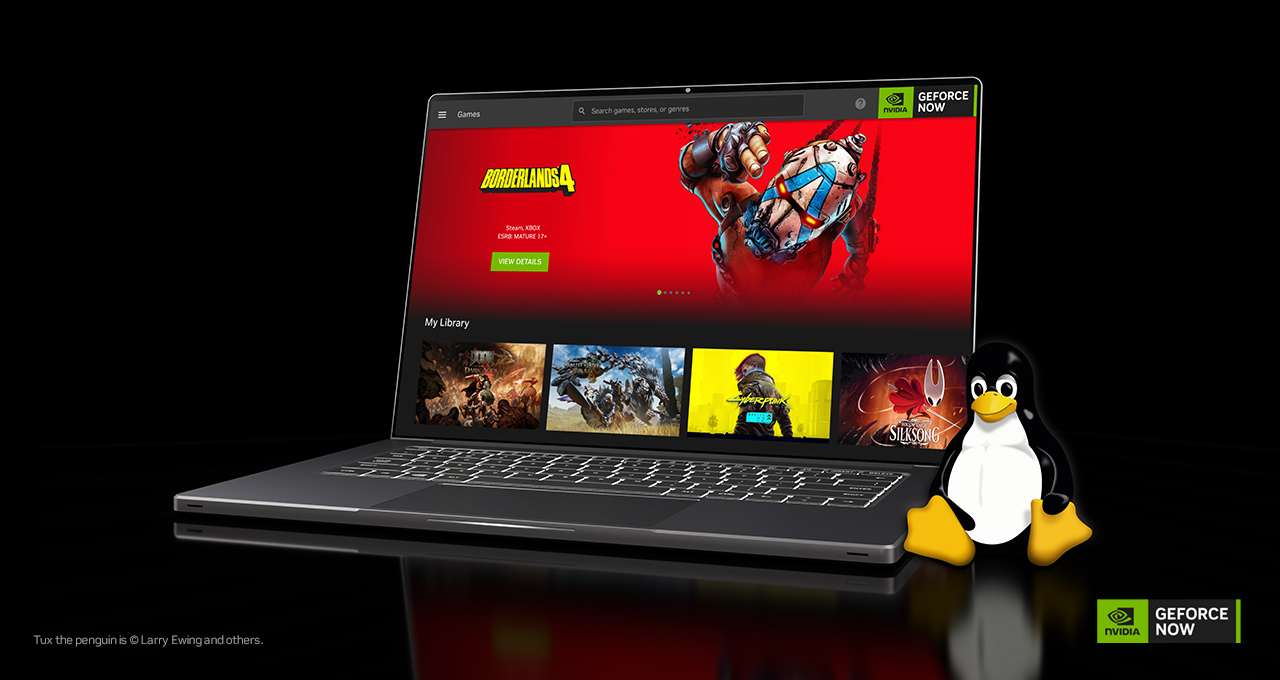
Linux gaming has taken another major step forward. NVIDIA has officially moved the Linux version of GeForce NOW out of beta, giving Linux users a fully supported desktop client for its cloud gaming service. :contentReference[oaicite:0]{index=0}
Until now, GeForce NOW on Linux was largely accessed through a web browser or unofficial solutions. The new desktop application brings the platform much closer to the experience already available on Windows and macOS.
Official support currently focuses on Ubuntu 24.04 LTS and newer releases. NVIDIA provides its own installer, while the application can also be installed through the company's official Flatpak repository. Because of that Flatpak-based distribution, the client may also run on additional Linux distributions, although NVIDIA does not officially guarantee support for every distro. :contentReference[oaicite:1]{index=1}
Up to 5K and 360 FPS streaming
The biggest improvement over the previous Linux experience is access to GeForce NOW's higher-end streaming capabilities.
On compatible systems and membership tiers, NVIDIA supports streaming at up to 5K resolution and 120 FPS. Competitive players can instead opt for up to 360 FPS at 1080p. :contentReference[oaicite:2]{index=2}
The Linux client also brings several RTX technologies to the platform, including ray tracing, DLSS 4 and NVIDIA Reflex. Since the actual game rendering happens on NVIDIA's servers, users do not necessarily need a powerful local gaming GPU to benefit from these technologies. :contentReference[oaicite:3]{index=3}
That makes GeForce NOW particularly interesting for older laptops, compact PCs and Linux systems that would otherwise struggle with modern AAA games.
Your internet connection still matters
Cloud gaming removes much of the local hardware requirement, but it puts considerably more pressure on the network connection.
NVIDIA recommends around 15 Mbps for 720p at 60 FPS, approximately 25 Mbps for 1080p, and considerably faster connections for higher resolutions and frame rates. Low latency is equally important, because every controller input has to travel to NVIDIA's servers before the resulting image is streamed back to the player. :contentReference[oaicite:4]{index=4}
A wired Ethernet connection or strong Wi-Fi setup therefore remains highly recommended for the best experience.
Linux hardware requirements are unusual
Linux users should also pay attention to their graphics stack.
According to NVIDIA's current requirements, hardware should support Vulkan video decoding for formats such as H.264 or H.265. There are also different display-server requirements depending on the GPU vendor: NVIDIA graphics cards currently rely on X11, while AMD and Intel systems use Wayland for the supported configuration. :contentReference[oaicite:5]{index=5}
These requirements mean that the Linux client is not necessarily a simple install-and-play solution for every configuration yet.
A major win for Linux gaming
The arrival of an officially supported GeForce NOW desktop client is significant because cloud gaming can bypass one of Linux gaming's traditional limitations: native game compatibility.
Games themselves continue to run on NVIDIA's cloud infrastructure, meaning Windows-only releases can potentially be streamed to a Linux desktop without requiring a native Linux version or compatibility layers such as Proton.
GeForce NOW currently supports thousands of PC games from platforms including Steam, Epic Games Store and Xbox, with additional titles added regularly. :contentReference[oaicite:6]{index=6}
Linux gaming has already become considerably more accessible over the past few years, and official GeForce NOW support adds another option for players who want access to demanding PC games without maintaining a high-end Windows gaming machine.
For Linux users with a fast internet connection, NVIDIA's cloud service has suddenly become a much more serious gaming platform.
Keep the signal
Community
Discussion · 0
Be the first to add a thoughtful response.